
Clozapine is an antipsychotic medicine used for treatment-resistant schizophrenia. It may also be used for psychoses in patients with Parkinson’s disease. Clozapine is an effective medicine when prescribed and monitored appropriately but can cause serious adverse effects.
Every community pharmacy team can help reduce harm from clozapine, even when the pharmacy does not supply it. Everyday conversations about constipation, infection, smoking or other medicines may reveal that a person is taking clozapine and needs prompt assessment, monitoring or referral.
Where community pharmacy can make a difference
- Identify clozapine use – ask about other medicines being taken during over-the-counter consultations (follow your organisation’s standard operating procedure or Sale of Medicines Protocol).
- Patient Medication Record (PMR) – record clozapine prominently on a person’s Patient Medication Record when identified. This will help identify any interactions with future medicines dispensed.
- Recognise warning signs – constipation, abdominal symptoms, sore throat, fever, infection, marked sedation or other signs of toxicity may require urgent clinical assessment, not routine self-care if the person is taking clozapine.
- Change in smoking habits – starting, stopping or reducing smoking and/or switching to vaping can alter clozapine levels. Refer promptly for specialist advice, monitoring and appropriate dose adjustment.
- Interactions – be alert to prescribed and non-prescription medicines that can worsen constipation, sedation or affect clozapine levels.
- Prevent missed-dose harm – remind patients if they are admitted to any hospital to tell hospital staff that they take clozapine. If treatment has been interrupted for more than 48 hours, it must not simply be restarted at the previous dose; urgent specialist advice and re-titration of the dose are needed.
What the pharmacy team should do
Follow the pharmacy’s Sale of Medicines Protocol and relevant SOPs consistently. Refer people taking clozapine to the pharmacist when symptoms, lifestyle changes or medicine requests could indicate an adverse effect or interaction. The pharmacist should assess urgency, avoid inappropriate over-the-counter treatment, and escalate or refer as appropriate (the patient’s specialist mental health team, clozapine service, GP, NHS 111 or emergency services).
Share and learn
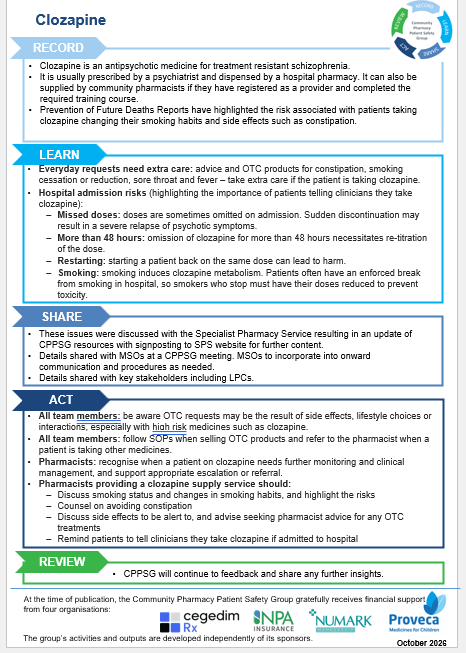
Use the CPPSG “Clozapine” Record, Learn, Share, Act, Review (RLSAR) resource for a one-page summary of the learning, recommended actions and prompts for team discussion.
Further clinical guidance: NHS Specialist Pharmacy Service (SPS) resources on clinical considerations, managing clozapine risks, constipation and interactions with smoking.
- Clinical considerations for patients prescribed clozapine (also contains links to the monitoring services for each of the three brands of clozapine)
- Managing the risks associated with patients prescribed clozapine
- Managing constipation in people taking clozapine
Other medicines that may require dose adjustments when a patient’s smoking habits change are covered in the NHS SPS resource on ‘managing specific interactions with smoking’.
Over-the-counter conversations
It is important to be mindful that symptoms a person is trying to treat with OTC products and advice could be side effects of other medication such as clozapine. Following the pharmacy’s Sale of Medicines Protocol or SOP can help identify someone taking clozapine who needs referral to the pharmacist. This may involve asking about medicines they take, including those supplied elsewhere, or giving advice such as: “This product may not be suitable if you are taking other medicines”. These conversations may reveal clozapine use. If the person is taking clozapine, refer them to the pharmacist. Be alert to requests for laxatives, smoking cessation support, and products for a sore throat or fever.
- Someone asks for laxatives or help with constipation
Clozapine can slow movement through the gut. Constipation is very common, but it can become serious and lead to a blocked bowel. Be alert to requests for laxatives or constipation advice: if the person takes clozapine, refer them to the pharmacist rather than treating the request as routine constipation.
- Someone asks for advice or products for a sore throat or fever
For someone taking clozapine, a sore throat, fever or signs of infection may indicate a serious problem affecting their blood cells. Be alert to these requests: if the person takes clozapine, refer them to the pharmacist rather than simply recommending a product to relieve the symptoms.
- Someone wants to stop or reduce smoking, or asks for nicotine replacement products
Tobacco smoke affects how the body breaks down clozapine. Reducing or stopping smoking can dangerously increase clozapine blood levels, with potentially fatal consequences, as described in this coroner’s report.
Be alert when someone seeks smoking cessation support or nicotine replacement products, or mentions a change in smoking, including smoking more, less or switching from cigarettes to vaping. If they take clozapine, refer them to the pharmacist because these changes may require specialist advice, monitoring and dose adjustment.
Suspect a side effect? Report it.
Suspected adverse reactions to clozapine can be reported to the MHRA through the Yellow Card scheme. Patients and healthcare professionals can report suspected side effects.

